

Ever worked with someone who knew their job well, yet meetings still felt confusing, slow, or tense?
That usually comes down to soft skills.
Soft skills are the workplace behaviours that help people communicate clearly, work with others, lead under pressure, solve problems, and build trust. They include communication, leadership, emotional intelligence, teamwork, adaptability, time management, conflict resolution, negotiation, and structured problem-solving.
I have seen this repeatedly in consulting and corporate training.
The professionals who grow fastest are usually the ones who explain complex ideas simply, listen before reacting, handle difficult conversations with maturity, and help the room move toward a decision.
In this blog, we will cover:
- What soft skills mean and how they differ from hard skills
- The most important soft skills in corporate settings
- How companies can build, assess, and measure soft skills effectively
Let’s start with the simple definition, then look at what soft skills actually look like at work.
What are Soft Skills?
Soft skills are the behavioural, interpersonal, and communication skills that help people work effectively with others, make better decisions, and handle workplace situations with professionalism.
In simple words, soft skills shape HOW someone works.
They affect the way a person explains ideas, listens in meetings, handles feedback, manages pressure, solves problems, leads a team, and builds trust with colleagues or clients. That is why soft skills matter in every role, from an entry-level analyst preparing updates to a senior leader guiding business decisions.
Think about two employees with the same technical knowledge.
Both know how to do the work, understand the tools, and can complete the task.
But one explains progress clearly, asks thoughtful questions, works well with the team, and stays calm when priorities change. The other needs constant clarification, struggles to communicate delays, and creates confusion in meetings.
The difference shows up quickly.
Soft skills turn knowledge into workplace impact. They help people use their technical ability in a way that others can understand, trust, and act on.
Soft Skills vs Hard Skills: What Is the Difference?
I have seen people confuse this many times in corporate training.
They think hard skills are the “serious” skills because they sound more technical: Excel, financial modelling, data analysis, coding, project management, strategy, or industry knowledge.
Those skills MATTER.
But once you enter a real workplace, performance depends on more than completing the task. You also need to explain your thinking, manage feedback, work with people, handle pressure, and help others trust your judgment.
That is where soft skills come in.
- Hard skills are the technical abilities you use to do a specific job.
- Soft skills are the behavioural, interpersonal, and communication skills that shape how you work with people, pressure, change, and decisions.
Think of a simple example.
Two analysts build the same financial model. Both models are accurate. One analyst sends the file with no explanation and waits for feedback. The other explains the key assumptions, highlights the decision needed, and prepares the manager for the trade-offs.
The technical work is similar.
The workplace impact feels completely different.
| Area | Hard Skills | Soft Skills |
| Meaning | Technical or job-specific abilities needed to complete a task | Behavioural, interpersonal, and communication skills that shape how people work |
| Examples | Excel, coding, data analysis, accounting, financial modelling, software tools | Communication, leadership, teamwork, adaptability, emotional intelligence, structured problem-solving |
| How they are learned | Courses, certifications, technical training, practice, and job experience | Feedback, coaching, real workplace practice, reflection, and repeated behaviour change |
| How they are measured | Tests, certifications, work output, technical tasks, and project quality | Manager feedback, peer feedback, meeting behaviour, collaboration quality, and workplace impact |
| Why they matter at work | They help someone complete the task correctly | They help someone make their work clear, trusted, and useful to others |
The best professionals build both.
They know how to do the work, and they know how to make that work easy for others to understand, trust, and act on.
Why Soft Skills Matter More as You Grow in Your Career?
Early in your career, people usually notice how well you complete tasks, like:
- Can you finish the analysis?
- Can you prepare the report?
- Can you meet the deadline?
- Can you follow the process?
That truly matters.
But as you grow, the expectations change.
People start judging how clearly you communicate, how well you handle pressure, how much trust you build, and how confidently you lead others through decisions.
I have seen this shift many times in consulting and corporate training. A technically strong professional can do excellent work and still struggle to grow if their ideas are hard to follow, their meetings create confusion, or their feedback conversations feel uncomfortable.
At higher levels, soft skills affect almost everything:
- Promotions: Leaders need people who can communicate clearly, take ownership, and influence others.
- Client trust: Clients remember how you make complex situations easier to understand.
- Team performance: Teams move faster when people listen well, share context, and handle disagreement professionally.
- Leadership readiness: Managers need judgment, emotional intelligence, and the ability to guide people through pressure.
This is also why soft skills are becoming more important in the modern workplace.
The World Economic Forum’s Future of Jobs Report 2025 lists skills such as analytical thinking, resilience, leadership, social influence, empathy, and active listening among the skills employers value for the future of work.
Technical ability helps you enter the room.
Soft skills shape how much trust, responsibility, and influence you earn once you are there.
10 Essential Soft Skills in Corporate Settings
Soft skills are easy to talk about in theory.
You see their real value inside the workplace.
They show up when someone explains a difficult update in a meeting, handles feedback without becoming defensive, keeps a project moving when priorities change, or helps a team make progress during disagreement.
I have seen this many times in corporate training.
The strongest professionals are usually not the loudest people in the room. They are the ones who make work easier for everyone around them. They bring clarity, calm, structure, and trust into everyday business situations.
In corporate settings, the most important soft skills include:
- Communication skills
- Top-down communication skills
- Leadership abilities
- Emotional intelligence
- Team collaboration
- Structured problem-solving
- Adaptability
- Time management and prioritisation
- Conflict resolution
- Negotiation and stakeholder management
Each of these skills affects how people work, lead, collaborate, and make decisions. Let’s look at what each one means in real workplace situations.
1. Communication Skills
Communication is the soft skill people notice FIRST.
It shows up in how you explain ideas, write updates, ask questions, listen in meetings, and adjust your message based on who is in the room.
A junior analyst, a manager, and a senior executive may all talk about the same project, but the way they communicate needs to change depending on the audience.
I have seen many smart professionals struggle because their thinking was strong, yet their message was hard to follow. They gave too much background, used unclear wording, or skipped the one point the team needed most.
Strong communication includes:
- Clear speaking
- Clear writing
- Active listening
- Better questions
- Audience awareness
For example, imagine an employee explaining a complex project update. A weak update creates confusion. A strong update tells the team what changed, why it matters, and what needs to happen next.
Here is a quick practice: Before your next update, write one sentence that answers: “What does this person need to understand after I speak?”
That one question can make your communication sharper immediately.
2. Top-Down Communication Skills
Top-down communication is one of the most valuable soft skills in corporate settings because it respects the audience’s time.
The idea is simple: lead with the answer, then support it with the evidence.
I saw this constantly in consulting.
Senior stakeholders rarely wanted a long build-up before the main point. They wanted to understand the conclusion first, then ask questions about the logic, data, risks, and next steps.
For example, instead of opening with five minutes of background, a manager might say:
“We should delay the product launch by two weeks because testing has revealed three issues that affect enterprise customers.”
Now the room knows the recommendation.
The manager can then explain the evidence behind it.
Top-down communication helps with:
- Executive updates
- Client presentations
- Strategy discussions
- Written recommendations
- Meeting summaries
It also makes business conversations feel more structured. The audience knows where the message is going, which makes the details easier to follow.
3. Leadership Abilities
Leadership is about creating direction, trust, and momentum.
That matters at EVERY level.
You do not need a senior title to show leadership. You show it when you take ownership, clarify priorities, support others, give useful feedback, and help the team move forward under pressure.
I have seen a few professionals become trusted leaders because they made work easier for everyone around them. They brought clarity, followed through, and also helped people understand what mattered most.
Leadership abilities include:
- Setting direction
- Taking ownership
- Giving feedback
- Creating trust
- Helping others perform better
For example, during a difficult project, a strong leader helps the team understand the priority, removes confusion, and keeps people focused on the next decision. That kind of leadership creates calm during complexity.
Ask yourself this:
“When work becomes messy, do people leave your conversations with more clarity or more confusion?”
That question reveals a LOT.
Leadership becomes stronger when people practise communication, judgment, accountability, and empathy together.
4. Emotional Intelligence
Emotional intelligence is the ability to understand your own reactions, read other people’s emotions, and respond with maturity.
This skill becomes especially important during pressure.
Anyone can communicate well when everything is easy. The real test comes when a client pushes back, a team member disagrees, a deadline moves, or a meeting becomes tense.
Emotional intelligence includes:
- Self-awareness
- Empathy
- Reading the room
- Managing reactions under pressure
- Handling difficult conversations
For example, imagine a manager noticing tension in a meeting. Instead of ignoring it or reacting sharply, the manager slows the conversation down and says:
“I think we are talking about two different concerns. Let’s separate the deadline issue from the ownership issue.”
That small moment changes the room.
I have seen emotional intelligence save meetings that were close to becoming unproductive. It helps people stay calm, listen properly, and bring the conversation back to the real issue.
| Quick practice: After a difficult conversation, ask yourself: “What did I feel, what did they need, and what would I handle differently next time?” That reflection builds maturity. |
5. Team Collaboration
Team collaboration is the ability to work smoothly with others while keeping shared goals in focus.
In corporate settings, very little work happens in isolation. Projects move across departments, stakeholders, deadlines, tools, and working styles. A person who collaborates well makes that movement easier.
That matters more than most teams realise.
Atlassian’s 2025 State of Teams report found that leaders and teams waste 25% of their time searching for answers, based on a survey of 12,000 knowledge workers and 200 executives.
That is exactly where strong collaboration creates value:
- People share context early
- Make ownership clear
- Reduce the time others spend chasing information
Good collaboration means you share context early.
You respect different perspectives, manage dependencies, and make sure people know what is happening before a deadline becomes a problem.
For example, a team member working with finance, sales, and operations should not wait until the final day to flag a delay. They should update the right people early, explain the impact, and help the group adjust the plan.
Strong collaboration looks like:
- Clear ownership
- Early communication
- Respectful disagreement
- Shared context
- Reliable follow-through
I always notice the people who reduce friction in a team. They make meetings clearer, help others do their work better, and build trust through consistency.
6. Structured Problem-Solving
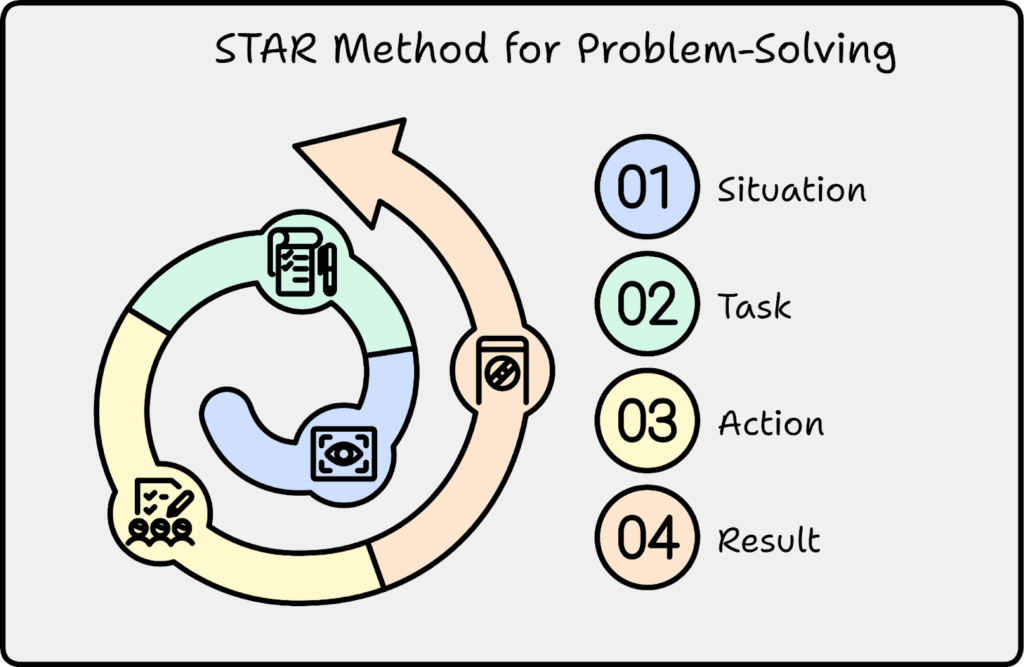
Structured problem-solving is the ability to break a complex issue into clear parts, find the root cause, and build a recommendation based on evidence.
This is one of the most important soft skills for consultants, managers, analysts, and leaders.
I have seen teams waste hours discussing symptoms because the problem was never structured properly. Someone says revenue is down, another person blames pricing, and someone else blames sales. The conversation moves in circles.
A structured problem-solver slows the issue down.
They ask:
- What exactly is happening?
- Where is the problem strongest?
- What are the possible causes?
- Which data will confirm or reject each cause?
- What recommendation follows from the evidence?
For example, a consultant looking at a revenue decline may break the problem into customer segments, pricing, conversion, retention, and sales activity. That structure makes the analysis easier to manage.
This connects closely with MECE thinking, where ideas are grouped clearly so nothing important is missed or repeated.
How to do this: Before solving a problem, draw the issue as 3 to 5 clear buckets. Then test each bucket with evidence.
7. Adaptability
Adaptability is the ability to stay effective when priorities, expectations, or conditions change.
Every workplace NEEDS this skill.
Projects shift. Clients change direction. Leaders ask new questions. Deadlines move. Tools change. A person with strong adaptability responds with clarity and momentum instead of frustration or confusion.
During one consulting workshop, I gave participants a case exercise with a clear client problem and a fixed recommendation path. Halfway through, I changed the client’s priority. Suddenly, cost reduction was no longer the main issue. Speed to market became the bigger concern.
The strongest participants did not panic or defend the old approach. They paused, restated the new priority, and adjusted their analysis around the new decision.
That is adaptability in action.
For example, imagine an employee who receives a new project direction halfway through the week. Instead of continuing with the old plan, they ask:
“What changes in the deliverable, what stays the same, and what should I prioritise first?”
Adaptability includes:
- Learning quickly
- Handling ambiguity
- Adjusting plans
- Staying calm during change
- Clarifying next steps
Note: Adaptability does not mean agreeing to everything quietly. It means understanding the change, communicating the trade-offs, and moving forward with discipline.
8. Time Management and Prioritisation
Time management is about using time well.
Prioritisation is about knowing what deserves attention first.
Together, they help professionals protect quality, reduce stress, and communicate realistic expectations.
I have seen many capable people struggle because they treated every task as equally urgent. That creates pressure, missed deadlines, and unclear communication with stakeholders.
Strong time management includes:
- Managing deadlines
- Protecting focus time
- Planning ahead
- Communicating delays early
- Avoiding last-minute surprises
Strong prioritisation includes:
- Separating urgent work from important work
- Understanding business impact
- Knowing what to do first
- Saying when something needs to move
- Explaining trade-offs clearly
For example, a manager may tell stakeholders:
“We can deliver the client summary this week, but the full analysis will need to move to Monday if we want the numbers checked properly.”
That is a practical soft skill. It protects the work and keeps people informed.
9. Conflict Resolution
Conflict resolution is the ability to handle disagreement professionally and move the conversation toward a useful outcome.
Workplace conflict is normal.
Teams disagree about priorities, ownership, timelines, budgets, and decisions. The problem starts when disagreement becomes personal, vague, or emotionally charged.
A person with strong conflict resolution skills separates the facts from the emotion. They listen before responding, clarify what each side needs, and then help the group find a path forward.
For example, two teams may disagree about who owns a project delay. A strong manager brings the conversation back to responsibilities, deadlines, and shared outcomes:
“Let’s clarify what each team owns, what changed last week, and what needs to happen before Friday.”
That sentence lowers tension because it gives the room a structure.
Conflict resolution includes:
- Listening carefully
- Staying calm
- Clarifying the real issue
- Finding common ground
- Moving toward a decision
I have seen this skill change the quality of an entire team. People become more honest when they trust that disagreement will be handled maturely.
In a disagreement, ask: “What outcome are we both trying to protect?”
That question shifts the conversation quickly.
10. Negotiation and Stakeholder Management
Negotiation and stakeholder management help professionals align people around decisions.
This skill is not only for sales or procurement. It matters in project work, leadership, consulting, operations, finance, HR, and client management. Anytime you need buy-in, resources, approval, or cooperation, you are using negotiation.
Stakeholder management means understanding what different people care about and communicating in a way that helps them make a decision.
For example, a project lead may need support from finance, operations, and sales. Finance cares about cost. Operations cares about execution. Sales cares about customer impact. The project lead earns buy-in by explaining how the decision affects each group.
This skill includes:
- Managing expectations
- Handling pushback
- Aligning interests
- Influencing without authority
- Communicating trade-offs clearly
I often tell professionals to prepare for stakeholder conversations by answering one question:
“What does this person need to believe before they support the decision?”
That question changes the quality of the conversation.
Here is the part most professionals miss.
Soft skills improve when you practise them in moments that feel real:
- A tense stakeholder meeting
- A messy business case
- A difficult feedback conversation
- A client update where the message needs to land clearly
That is the kind of environment High Bridge Academy builds inside the Business Excellence Bootcamp.
Participants learn from former McKinsey, Bain, and BCG consultants who have used these skills in client rooms, strategy projects, executive discussions, and high-pressure presentations. The training covers communication, leadership, structured problem-solving, stakeholder management, and decision-making through business cases, drills, simulations, and feedback.
So these skills stay practical.
You are not only learning what strong communication looks like.
You are practising how to explain your thinking, handle pushback, structure a problem, lead a discussion, and move a room toward a decision.
Soft Skills Examples by Role: What Strong Performance Looks Like at Work
Soft skills DO NOT look the same in every role.
- An analyst uses them to explain findings clearly.
- A manager uses them to align people around priorities.
- A consultant uses them to turn messy business problems into structured recommendations.
- A sales professional uses them to build trust with prospects.
- An HR or L&D leader uses them to coach people and improve team behaviour.
- An executive uses them to communicate direction when the stakes are high.
That is why soft skills are easier to understand when you see them in real workplace situations.
Here is what strong performance looks like across different roles:
| Role | Most Important Soft Skills | What It Looks Like at Work |
| Analyst | Structured problem-solving, communication, attention to detail | Turns data into a clear update that helps the manager understand the issue and make a decision. |
| Manager | Leadership, prioritisation, feedback, conflict resolution | Helps the team understand what matters most, removes confusion, and keeps work moving during pressure. |
| Consultant | Top-down communication, structured problem-solving, stakeholder management | Breaks down a complex client problem, leads with the recommendation, and explains the logic clearly. |
| Sales Professional | Active listening, negotiation, emotional intelligence, adaptability | Understands the customer’s real concern, handles objections calmly, and builds trust during the buying process. |
| HR or L&D Leader | Coaching, facilitation, empathy, behaviour assessment | Designs training that helps employees communicate better, collaborate more effectively, and apply feedback at work. |
| Executive | Strategic communication, influence, judgment, decision-making | Communicates priorities clearly, earns trust across teams, and helps the organisation move toward the right decisions. |
The pattern is simple.
Soft skills become valuable when they change how people experience your work. They help others understand your thinking, trust your judgment, and move forward with more confidence.
How to Build Soft Skills That Show Up in Meetings, Feedback, and Decisions?
Once you understand how soft skills look in different roles, the next question is simple.
How do you actually build them?
Soft skills improve through real use. You practise them in meetings, presentations, feedback conversations, stakeholder updates, and moments where the pressure is high enough to reveal your habits.
Start here:
- Ask for specific feedback: After a meeting or presentation, ask, “Was my message clear?” or “Where did I lose the room?”
- Observe strong communicators: Notice how they open meetings, handle pushback, simplify complex points, and close conversations.
- Practise one behaviour at a time: Focus on clearer updates, better listening, calmer responses, or stronger follow-through.
- Use real work as practice: Treat client calls, internal meetings, and feedback sessions as training moments.
- Reflect after difficult conversations: Write down what went well, what felt tense, and what you would do differently next time.
- Record yourself: Review a presentation or meeting update to hear whether your message is clear.
- Get structured support: Work with a coach, trainer, or program when you need faster improvement.
When I worked as a McKinsey consultant, soft skills improved fastest through repetition. A manager would review not only the analysis, but also how clearly I explained it, how I handled questions, and how confidently I moved the discussion forward.
That is the real practice ground.
How to Spot Soft Skills in Real Workplace Behaviour?
Soft skills become easier to assess when you stop looking for personality traits and start looking for behaviour.
Someone may describe themselves as a “great communicator” or a “team player,” but the real evidence appears in everyday work.
How do they explain a problem under pressure?
How do they respond to feedback?
How do they behave when a meeting becomes tense?
How do they follow through when other people depend on them?
That is where soft skills become visible.
I always recommend assessing soft skills through real workplace situations, such as:
- Behavioural interviews
- Role-play exercises
- 360-degree feedback
- Manager observations
- Peer feedback
- Presentation exercises
- Case-based tasks
- Team project reviews
For example, if you want to assess communication, watch how someone explains a complex idea to a mixed audience. If you want to assess collaboration, look at how they share context, manage dependencies, and involve the right people early.
Strong soft skills often show up in simple behaviours:
- Explains ideas clearly
- Listens before responding
- Handles disagreement professionally
- Gives useful feedback
- Structures a problem logically
- Follows through on commitments
The key is to assess what people actually do, especially when the work becomes complex, fast-moving, or uncomfortable.
That gives you a much clearer view than asking whether someone is “good with people.”
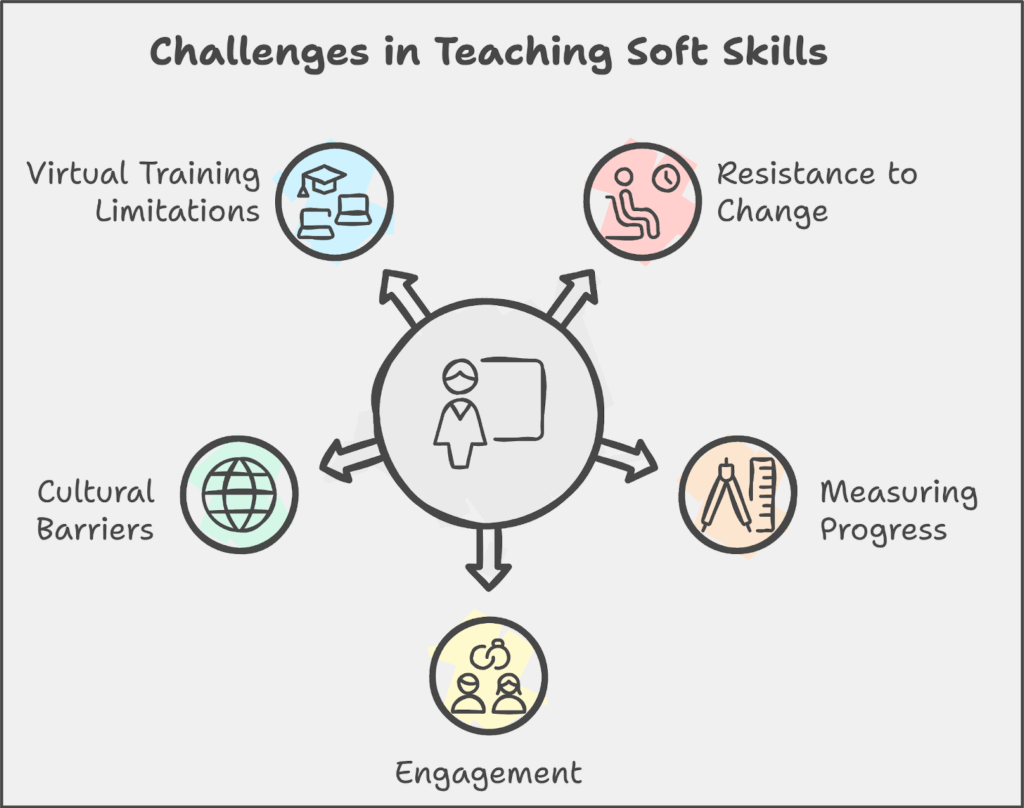
Why Soft Skills Are Hard to Teach in Corporate Teams?
Soft skills are difficult to teach because they depend on behaviour, repetition, and real workplace pressure.
A trainer can explain a communication framework in one session. They can show people how to give feedback, manage conflict, or lead a meeting more effectively. The concept may feel clear during the workshop, but the real test starts later.
That test usually happens in moments like:
- A stakeholder pushes back in a meeting
- A deadline changes without warning
- A team member reacts defensively to feedback
- A client asks a difficult question
- A manager needs to explain a decision under pressure
This is where soft skills become visible.
Many companies also struggle because people often overestimate their own communication, listening, or leadership ability. The gaps appear when you observe real behaviour: how someone presents, responds, listens, follows up, or handles disagreement.
Why One-Off Workshops Rarely Change Behaviour?
One-off workshops can create awareness, but lasting improvement needs a stronger loop:
- Practice the behaviour
- Get feedback
- Try again
- Apply it at work
- Reinforce it through managers
For example, a feedback workshop becomes more valuable when managers use the same language in team check-ins, performance reviews, and project debriefs.
The skill has to stay active inside daily work.
Why Remote Soft Skills Training Needs a Different Approach?
Remote training needs a tighter structure because attention drops faster online. Body language is harder to read, group energy is harder to build, and role-play needs clearer instructions.
The best remote sessions use smaller groups, breakout exercises, written prompts, live practice, and specific feedback moments.
That keeps people involved and makes the training easier to apply after the session ends.
Effective Soft Skills Training Methodologies
For L&D leaders, HR teams, and managers, soft skills training works best when it is built around real workplace situations.
Employees need to practise the conversations, decisions, and pressures they actually face at work, then receive feedback on how their behaviour lands.
That means the training should include realistic scenarios: giving feedback to a defensive team member, handling stakeholder pushback, resolving tension between teams, presenting a recommendation, or leading a discussion when priorities are unclear.
The strongest soft skills training usually combines practice, reflection, feedback, and repetition.
Here are the methods that work best in corporate teams.
1. Role-Playing Exercises
Role-playing gives employees a safe place to practise difficult workplace moments before they face them in a real meeting or conversation.
It works well for:
- Difficult conversations
- Feedback discussions
- Conflict resolution
- Negotiation
- Client communication
For example, a manager can practise giving feedback to an employee who reacts defensively. A sales professional can practise handling a pricing objection. A team lead can practise calming tension between two departments.
The value comes from hearing your own words in the moment.
People quickly notice when they sound vague, too sharp, too apologetic, or unclear. With feedback, they can adjust the language and try again.
That repetition builds confidence.
2. Case Studies
Case studies place soft skills inside realistic business problems.
They are especially useful when employees need to practise structured thinking, leadership judgment, stakeholder communication, and decision-making.
A strong case gives participants incomplete information, competing priorities, and a clear business question to solve.
For example, a team may work through a case where customer churn is rising, budgets are tight, and sales and operations disagree on the cause. Participants need to structure the issue, discuss trade-offs, and present a recommendation.
That type of exercise trains several soft skills at once.
People practise analysis, communication, collaboration, and judgment in the same business situation.
3. Group Discussions
Group discussions help participants practise collaboration in real time.
They work well for:
- Listening
- Facilitation
- Perspective-taking
- Challenging assumptions
- Explaining ideas clearly
The best group discussions have a clear question and a specific outcome. For example, instead of asking people to “discuss leadership,” the trainer might ask:
“Which stakeholder should we influence first, and why?”
That question gives the discussion direction. It encourages people to listen, compare viewpoints, explain their reasoning, and move toward a shared answer.
It also reveals useful behaviour in the room.
Like:
Who brings others into the conversation?
Who listens carefully?
Who helps the group reach clarity?
4. Coaching and Feedback Loops
Coaching helps people understand how their behaviour lands with others.
This matters because many professionals cannot fully see their own communication habits. They may speak too quickly, over-explain, avoid the difficult point, or miss the concern behind a stakeholder’s question.
Coaching works well for:
- Leadership development
- Communication improvement
- Behaviour change
- Long-term growth
This is where High Bridge Academy’s Business Excellence Bootcamp becomes especially relevant.
The program is built around a simple idea: professionals improve faster when they practise under the eye of people who have already worked in high-pressure client environments.
High Bridge brings together a faculty network of 60+ professionals with backgrounds at McKinsey, Bain, BCG, and other leading firms. The bootcamp has also trained 1,000+ professionals globally, which gives the learning environment a practical, business-focused edge.
During coaching and feedback sessions, participants are pushed to sharpen the exact behaviours that matter at work:
- Is the message clear enough for a senior stakeholder?
- Is the problem structured logically?
- Does the recommendation sound confident?
- Are the trade-offs easy to understand?
- Can the person handle questions without losing control of the discussion?
That kind of feedback is difficult to get from a generic workshop.
A trainer may tell you to “communicate better.” A former consultant can show you exactly where your message becomes unclear, where the logic breaks, and where your delivery needs more control.
That is how soft skills become easier to improve: one real business situation, one specific correction, and one stronger attempt at a time.
5. Real Workplace Projects
Real workplace projects help employees apply soft skills in the same context where they need to perform.
They are useful for:
- Applying learning to actual work
- Building confidence
- Connecting training to performance
- Making the skill stick
For example, after a communication workshop, participants can apply the skill to a real team update, client presentation, or stakeholder meeting. Then the manager or trainer can review what changed.
Useful review questions include:
- Was the message clearer?
- Did the person handle questions better?
- Did the meeting move toward a decision?
- Did the team understand the next step?
That is the real test of soft skills training.
The training has worked when people communicate, collaborate, lead, and solve problems better in the work they already do.
Best Resources for Building Soft Skills Faster
The best resource depends on the skill you are trying to improve.
That sounds obvious, but I have seen many professionals make this mistake. They read a leadership book when their real issue is unclear communication. They join a generic workshop when they need stakeholder practice. They ask for feedback, then never define the exact behaviour they want to improve.
When I was at McKinsey, improvement became much easier when the skill gap was specific.
Was the issue the structure of the message?
The confidence in delivery?
The way I handled questions?
The clarity of the recommendation?
Once the gap was clear, the right resource became easier to choose.
Here is a simple way to think about it:
| If You Struggle With | Best Resource to Use |
| Explaining ideas clearly | Communication frameworks and presentation training |
| Leading meetings with more structure | Top-down communication guides and meeting practice |
| Handling difficult conversations | Role-play exercises and coaching |
| Solving messy business problems | Business case practice and MECE frameworks |
| Influencing senior stakeholders | Stakeholder management training |
| Building leadership presence | Leadership development programs |
| Understanding how others experience your behaviour | Manager feedback, peer feedback, or 360-degree reviews |
Books and frameworks are useful when you need language for the skill. Coaching helps when you need sharper correction. Business cases help when the skill needs to show up in a decision-making environment. Leadership programs help when you are preparing for a bigger role.
For professionals who want all of this in a more structured path, High Bridge Academy offers business training programs focused on the skills behind strong workplace performance: communication, leadership, structured problem-solving, presentations, and stakeholder management.
The key is to stop choosing resources randomly.
Start with the behaviour you want to improve. Then choose the resource that helps you build that behaviour faster.
Soft Skills Turn Ability Into Workplace Impact
Soft skills usually show up in small moments first: how clearly someone explains a problem, how calmly they handle pressure, how they respond to feedback, and how much easier a meeting feels after they speak.
Over time, those moments build a reputation.
People start to trust the person who brings clarity into confusion, listens before reacting, and helps the group move toward a decision. That is where soft skills become real career leverage.
Technical skills help you perform the work well. Soft skills help others understand your thinking, trust your judgment, and move forward with confidence. I have seen this repeatedly in consulting and training. The professionals who grow fastest keep improving how they communicate, lead, listen, and make decisions with others.
High Bridge Academy helps professionals build these skills through practical business training, backed by a 4.9/5 Trustpilot rating.
Book a free consultation to find the right training path for your goals.
FAQs About Soft Skills
Managers usually notice communication, reliability, ownership, listening, and problem-solving first because these skills affect daily work.
Leadership, communication, judgment, stakeholder management, and emotional intelligence matter strongly for promotions because higher roles require influence, trust, and decision-making.
Technical ability helps someone complete tasks, but workplace success also depends on explaining ideas, working with others, handling feedback, and managing pressure.
Yes. People can improve soft skills through feedback, reflection, observation, and deliberate practice in real workplace situations. Formal training helps when faster or more structured improvement is needed.
Companies can use behaviour-based rubrics, 360-degree feedback, manager observations, role-play assessments, and real project outcomes to make soft skills measurement more objective.
Some behaviours can improve within weeks with focused practice, but deeper soft skills such as leadership, conflict resolution, and emotional intelligence usually need months of repetition and feedback.