

Most professionals know that managing stakeholders matters. Few have ever been taught how to actually do it. The result: misaligned projects, slow decisions, and credibility lost in rooms that matter most.
Stakeholder management is a core consulting skill. It covers how to identify decision-makers, build alignment, communicate with executives, and influence without direct authority. These skills are standard inside top strategy firms — and rarely taught anywhere else.
This guide covers five programs that develop stakeholder management skills for professionals in 2026. They range from structured bootcamps built on consulting methodology to broad platforms with relevant course libraries. We’ll compare what each one actually covers so you can choose the right fit.
What are the best stakeholder management courses for professionals?
The five programs below vary significantly in depth, format, and audience. Some treat stakeholder management as a core competency. Others offer useful adjacent skills — communication, influence, executive presence — that support stronger stakeholder relationships.
- High Bridge Academy — Teaches stakeholder management as a core consulting skill alongside structured problem solving and AI
- LinkedIn Learning — A broad professional library with accessible courses on stakeholder communication and influence
- Maven — A cohort-based marketplace with instructor-led courses on leadership and communication
- Coursera — University-backed online courses covering stakeholder communication and business strategy
- Udemy — A large self-paced course library with affordable options on influence and stakeholder skills
| Platform | Starting Price | Best For | Key Differentiator | Free Trial |
|---|---|---|---|---|
| High Bridge Academy | ~$500 | Professionals and teams | Consulting-grade stakeholder management + AI | No |
| LinkedIn Learning | ~$30/month | LinkedIn Premium users | Broad library, easy access | Yes (via LinkedIn Premium trial) |
| Maven | $300–$2,000+ | Tech and product professionals | Cohort-based with live instructors | Lightning Lessons (free) |
| Coursera | Free audit / $49–$79/month | Budget-conscious learners | University-backed certificates | Free audit available |
| Udemy | $9.99–$199.99/course | Learners on a budget | Large library, lifetime access | 30-day refund policy |
1. High Bridge Academy: Stakeholder management as a consulting skill
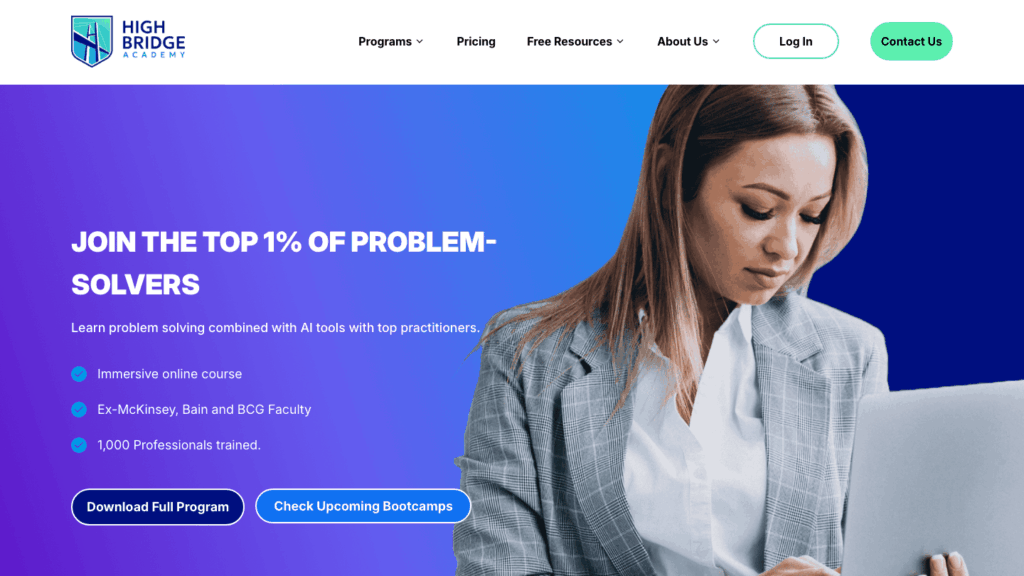
High Bridge Academy is our platform. We’re including it here because it’s directly relevant — but you should weigh that context accordingly.
High Bridge Academy’s Business Excellence Bootcamp (BEB) treats stakeholder management as a core competency — not an afterthought. It sits alongside structured problem solving, executive communication, and AI integration in the curriculum. The program draws directly from the methods used inside top strategy consulting firms.
Stakeholder management in consulting means more than keeping people informed. It means identifying the right decision-makers, building alignment before key meetings, and influencing people who outrank you. BEB teaches this in the context of real professional situations, not hypothetical exercises.
The program was developed and is delivered by 60+ former McKinsey, Bain, and BCG consultants, bringing real client-facing experience into every workshop. This matters because real stakeholder management happens in high-stakes environments — not classroom simulations. BEB is designed to prepare professionals for exactly those moments.
Key features
- Stakeholder management and influence — a dedicated core module, not a bonus topic
- Executive communication — learn to communicate clearly with senior stakeholders and leadership
- Structured problem solving — the analytical foundation that makes stakeholder conversations more credible
- AI integration — use AI tools to prepare, present, and follow up with stakeholders more effectively
- Practitioner-led instruction — taught by former McKinsey, Bain, and BCG consultants with direct client engagement experience
Pricing
- Entry workshops: ~$500
- Full bootcamp: up to ~$2,000
- Full pricing details: highbridgeacademy.com/beb-pricing/
Pros & cons
Pros:
- Stakeholder management is a core module, not a supplemental topic
- Integrates communication, problem solving, and AI alongside stakeholder skills
- Taught by practitioners who managed real stakeholders at top consulting firms
Cons:
- Higher starting price than general online learning platforms
- Best suited for professionals with 2–10 years of work experience; not entry-level
Customers
BEB serves professionals both in and outside consulting — including roles in tech, finance, corporate strategy, and startups. Corporate teams use the program to build consistent stakeholder management and communication capabilities across functions. Visit highbridgeacademy.com to learn more.
2. LinkedIn Learning: Stakeholder skills in the flow of work
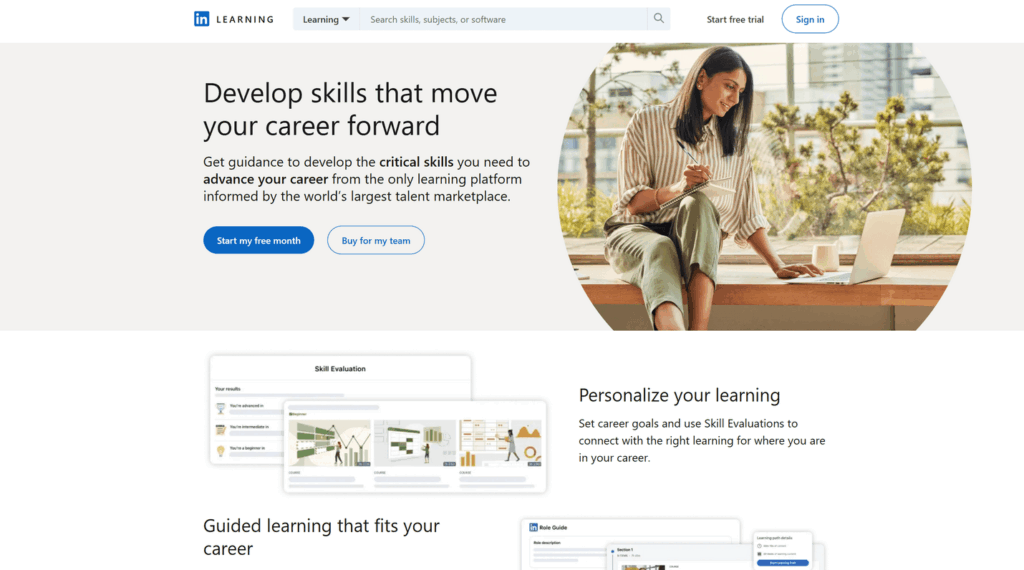
LinkedIn Learning is a large professional skills library integrated directly into the LinkedIn platform. It’s owned by Microsoft and available to LinkedIn Premium subscribers. The library covers communication, leadership, business analysis, and stakeholder management topics across thousands of short-form courses.
For stakeholder management specifically, LinkedIn Learning offers courses on influencing without authority, managing up, executive presence, and conflict management. These are practical topics. The challenge: courses are short, self-paced, and isolated — no integrated methodology connects them.
LinkedIn Learning works best as a supplement, not a primary program. It’s a practical choice if you’re already a LinkedIn Premium subscriber. The low friction makes it easy to start — but the format limits how much skill actually transfers.
Key features
- 22,000+ courses covering communication, leadership, stakeholder management, and more
- LinkedIn profile integration — certificates display directly on your LinkedIn profile after completion
- Short-form format — most courses run 1–3 hours; easy to fit into a busy schedule
- LinkedIn Learning for Business — enterprise subscription option for teams
- High production quality and recognizable instructors in many categories
Pricing
- Included with LinkedIn Premium (~$39.99/month)
- Standalone LinkedIn Learning: ~$29.99/month
- LinkedIn Learning for Business: by inquiry for teams
Pros & cons
Pros:
- Already included in LinkedIn Premium for many professionals — zero additional cost
- Certificates are visible on LinkedIn profile, which adds professional signal
- Broad library covers most stakeholder-adjacent skills at an introductory level
Cons:
- No integrated methodology — courses are isolated and don’t build on each other
- Content is broad and introductory; not practitioner-level depth
- No live interaction, cohort, or application component — purely passive viewing
Customers
LinkedIn Learning is used by millions of professionals globally through LinkedIn Premium subscriptions. Many enterprise organizations deploy LinkedIn Learning for Business as part of their L&D stack. It’s widely available and low-commitment — which also means completion rates tend to be low.
3. Maven: Cohort-based courses with live instructors
Maven is a marketplace platform where subject matter experts create and run their own cohort-based courses. It was founded by the co-founders of Udemy and altMBA, giving it strong online education DNA. Courses on Maven cover AI, product management, leadership, communication, and strategy.
For stakeholder management and influence, Maven hosts various courses taught by practitioners from Google, Meta, Amazon, and other companies. Course quality and depth vary by instructor. You’re relying on the individual instructor’s approach — not a standardized curriculum.
Maven’s cohort model is its main advantage over self-paced platforms. Live sessions and a defined peer group create accountability. That said, Maven has no unified stakeholder curriculum — you’d curate it yourself from multiple instructors.
Key features
- Cohort-based format — live sessions and peer cohorts create accountability and interaction
- Practitioners from top companies — instructors from Google, Meta, OpenAI, Amazon, and others
- Lightning Lessons — free short-form sessions as a low-risk entry point before buying a full course
- 4.5–5.0 star ratings typical across courses on the platform
- Broad topic coverage — AI, product, leadership, communication, management, and more
Pricing
- Courses typically $300–$2,000+ depending on instructor and format
- No platform-wide pricing; varies by course
- Lightning Lessons: free
Pros & cons
Pros:
- Cohort-based format creates live interaction and peer accountability
- Strong founding team with deep online education expertise
- Free Lightning Lessons let you sample instructor style before committing
Cons:
- Marketplace model means variable quality — no standardized stakeholder management curriculum
- No single program teaches stakeholder management as an integrated consulting skill
- Platform skews toward tech and product roles; not industry-agnostic
Customers
Maven has built strong brand credibility among tech, product, and growth professionals. Notable instructors include practitioners from leading companies and independent consultants like Davina Stanley of Clarity First. Course ratings consistently run 4.5–5.0 stars, though this varies significantly by instructor.
4. Coursera: University-backed stakeholder management courses
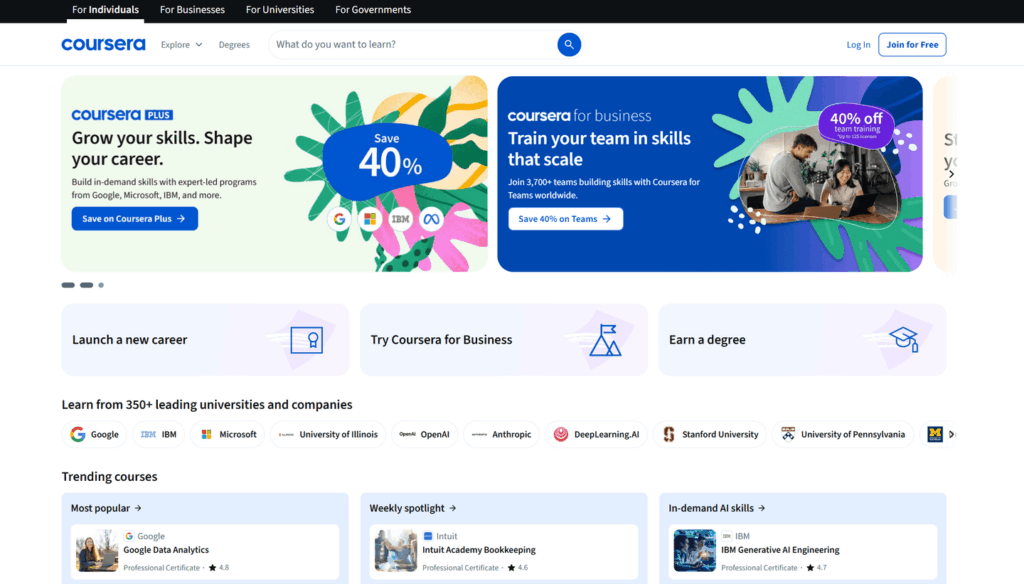
Coursera is the world’s largest online learning platform, with 148M+ registered learners and 7,000+ courses from 700+ university and company partners. It offers courses on business communication, stakeholder management, strategic thinking, leadership, and AI. Many courses are tied to university credentials from institutions like Yale, Michigan, and Google.
For stakeholder management specifically, Coursera offers individual courses and specializations covering communication, leadership, and business strategy. These courses are often taught by business school faculty. The academic framing is thorough, but the instruction style is more theoretical than practitioner-led.
The free audit option makes Coursera an accessible starting point. If cost is a key factor, auditing relevant courses gives you access to the content for free. Just note that free audits don’t include graded work or certificates.
Key features
- 7,000+ courses from 700+ university and company partners worldwide
- University-backed certificates from institutions like Yale, Michigan, Google, and IBM
- Free audit option — access most course content at no cost
- Coursera Plus — annual subscription ($399+/year) for access to most of the catalog
- Coursera for Business — corporate subscription option for organizational L&D
Pricing
- Free audit for most courses
- Individual certificates: ~$49–$79/month
- Coursera Plus: $399+/year for broad catalog access
- Coursera for Business: by inquiry
Pros & cons
Pros:
- Free audit option reduces financial risk for exploring course content
- University credentials from well-known institutions add credibility
- Broad catalog covers most professional development topics
Cons:
- Academic instruction — most stakeholder management courses are taught by professors, not practitioners
- No integrated consulting methodology connecting problem solving, communication, and influence
- Completion rates on self-paced MOOCs are notoriously low without accountability structures
Customers
Coursera serves 148M+ registered learners globally and works with corporate clients through Coursera for Business. It’s a well-established platform used broadly in corporate L&D programs. Many professionals use Coursera to earn supplemental credentials rather than as a primary skills transformation program.
5. Udemy: Affordable self-paced courses on influence and stakeholder skills
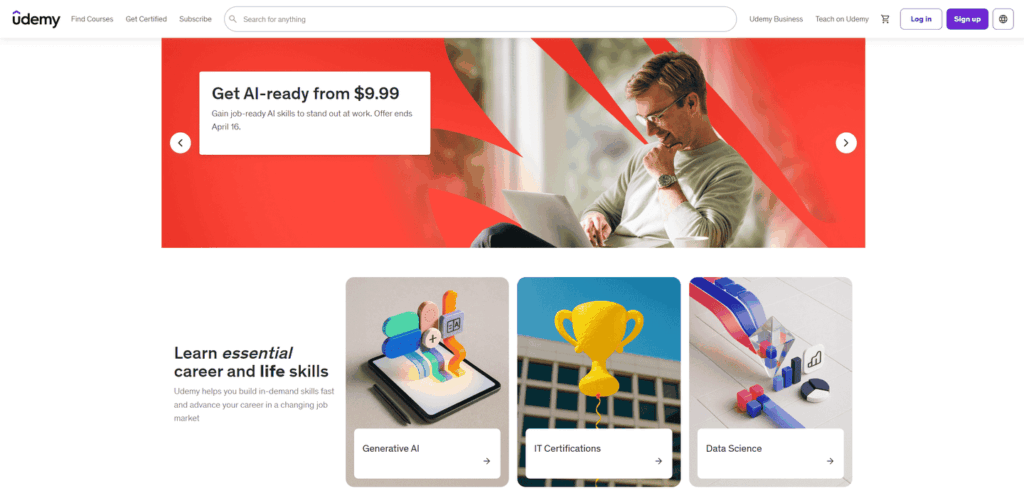
Udemy is a large self-paced course marketplace with 220,000+ courses and 73M+ learners. Individual instructors create and sell courses, which cover nearly every professional topic including communication, influence, stakeholder management, and leadership. Prices are low — often under $20 during frequent sales.
Udemy’s breadth is its main selling point. You can find courses specifically on influencing without authority, managing up, conflict resolution, and executive communication. The challenge is quality control: with 75,000+ instructors, content varies widely.
Udemy works best for learners who want to explore a specific skill at low cost and low commitment. It’s a useful starting point. But assembling a stakeholder management curriculum from fragmented courses without a common framework will only take you so far.
Key features
- 220,000+ courses covering nearly every professional skill topic
- Lifetime access per course — no expiration once you purchase
- Low price point — courses often available for $9.99–$19.99 during frequent promotions
- Udemy Business — team subscription option for organizations
- 30-day refund policy on most purchases for a risk-free trial
Pricing
- Individual courses: $9.99–$199.99 (frequent sales to $9.99–$19.99)
- Udemy Business: by inquiry for teams
Pros & cons
Pros:
- Very low price point reduces financial commitment for exploration
- Lifetime access per course with no expiration
- Large library covers most adjacent stakeholder skill topics
Cons:
- No quality control — instructor credentials and course rigor vary widely
- Courses teach skills in isolation; no integrated stakeholder management methodology
- No live interaction or cohort component — purely passive video consumption
Customers
Udemy serves 73M+ learners globally and offers Udemy Business for corporate teams. It’s frequently used as a low-cost way to explore a skill before committing to a more structured program. Many professionals use Udemy for quick, specific upskilling rather than comprehensive professional transformation.
FAQ
Most business outcomes depend on getting people aligned — across teams, levels, and functions. Stakeholder management is how you make that happen. Professionals who do it well move faster, face fewer blockers, and earn more trust from leadership.
Clarity First is the deepest option for the Pyramid Principle. Davina Stanley is the only Barbara Minto-approved instructor outside McKinsey. High Bridge Academy’s BEB teaches the Pyramid Principle as part of a broader consulting toolkit. Analyst Academy applies it specifically to slide decks and presentations.
Communication is how you convey information. Stakeholder management is a broader discipline covering who you engage, when, how you build alignment, and how you influence decisions. Good communication supports stakeholder management — but the two are not the same skill.
You can learn the basics. Both platforms have useful introductory courses on influence, managing up, and executive communication. But neither platform provides the structured methodology or live practice environment needed to develop real stakeholder management capability.
The frameworks and mindset shifts can be learned quickly — in days or weeks. Real competence builds through practice in high-stakes situations. Programs with applied components and live interaction accelerate this more than passive video learning.
Yes. Individual contributors manage stakeholders constantly — senior colleagues, cross-functional partners, clients, and executive sponsors. The earlier you develop this skill, the faster you advance. It’s not a management-only competency.
Conclusion: Choose depth over breadth
If you want to develop stakeholder management as a real professional capability, start with a program that treats it as a core skill — not a soft add-on. High Bridge Academy’s Business Excellence Bootcamp is built for exactly that: consulting-grade stakeholder management alongside structured thinking, executive communication, and AI.
LinkedIn Learning and Coursera are useful supplements if you’re already subscribed. Maven is worth exploring if you want a live cohort experience on specific influence and leadership topics. Udemy is a low-cost starting point to explore the basics.
Ready to build genuine stakeholder management skills? Visit High Bridge Academy to see how the Business Excellence Bootcamp can help you perform at a consulting level — no consulting background required.d see how consulting-grade decision making applies to your actual work.